



 Return
WHAT’S THE DIFFERENCE BETWEEN ORGANIC AND COMMERCIAL SILK?
First of all, the difference between the two is not that big, but the result of choosing one over the other makes a difference. The process is almost the same, but the scale of which they are produced and what is put into the production is not.
Silk is one of the oldest fibers we know of and has its origin from China, around 2600 BC. The cultivation of silkworms in order to produce silk is called sericulture. The first step in the production is called “hatching the eggs”. During this stage, silkworms lay eggs in an artificial environment with the aim of getting them to lay as many eggs as possible. The female produces around 300 to 400 eggs at the time. The silkworm dies right after laying these eggs. After 10 days, the eggs hatch into larvae (caterpillars), and the feeding period starts.
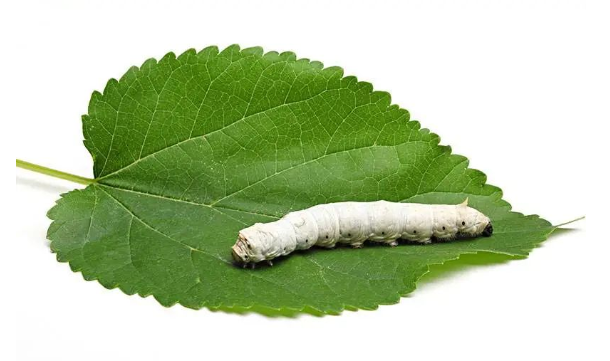
During the feeding period in commerical silk production the larvae is fed mulberry leaves (results in the finest silk) and grow very fast. They eat around 50000 times of their initial weight. In approximately 6 weeks, the larvae are 10000 times heavier than at the time of hatching, and ready to spin a silk cocoon. The silkworm needs around 3 till 8 days to spin a cocoon, thereby producing one kilometer of silk filament.
Organic silk has more or less the same processing as conventional silk here, but no pesticides, insecticides or harsh chemicals have been used to make land or larva grow faster. The silkworms get a more varied diet instead of mulberry leafs alone, and everything is organic.
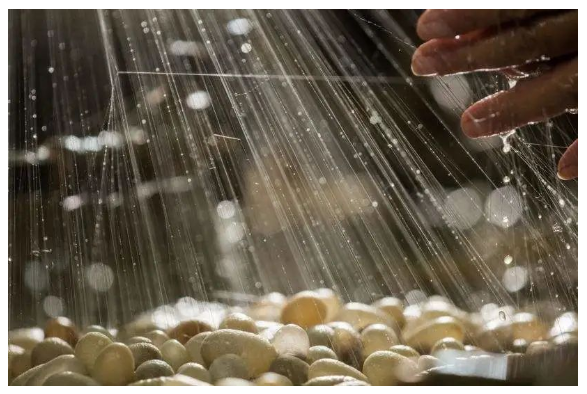
When the coooon is ready, it is treated with boiling water or hot air and the silk filaments are unwounded again, getting soft by the heat, which is called “reeling the filament”.
In nature, at this point, the silkworm (e.g. chrysalis) would break out of the cocoon and become a moth. However, this would damage the silk fibers, and therefore the chrysalis is killed before the thread is collected from the cocoon.
The process in organic silk production and commercial production is more or less the same in the stage where the silkthread is collected. There is still no way of keeping the thread in one piece and make the moth survive.
One cocoon contains only a small amount of silk and around 2500 silkworms are needed in order to produce one pound of raw silk. Silk amounts to only a very small percentage of the total textile fiber market, even less than 0.2%. Organic silk is then again a marginal percentage of this. The production is small and controlled, thus also creates a smaller amount of raw material.
TO CONCLUDE:
