



 Return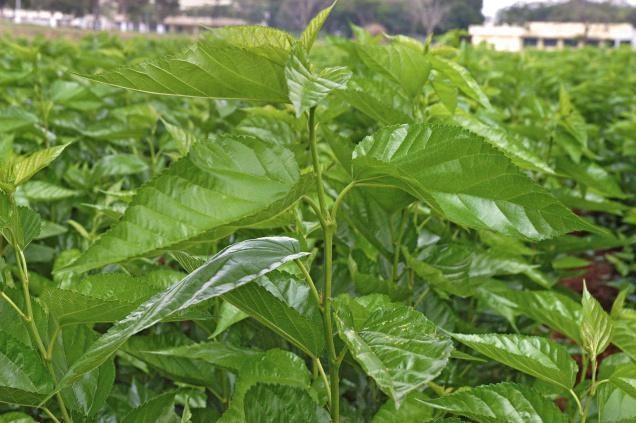
Commissioner for Sericulture G. Satish has said subsidy will be extended to all farmers seeking to start mulberry cultivation
The sericulture sector in Karnataka is in for an overhaul with the government keen on injecting fresh reforms similar to the exercise that was undertaken over three decades ago. Karnataka is the largest producer of silk in the country and accounts for nearly 30 per cent of the country’s exports, over Rs. 1,000 crore.
What has prompted the government to act is the steady decline in the area under mulberry cultivation over the past two decades, although total silk production (8,500 tonnes) has more or less been constant, given the increase in productivity and the new reeling techniques. The Central Silk Board is expected to extend support to the exercise in stepping up area under sericulture.
Commissioner for Sericulture G. Satish said subsidy would be extended to all farmers seeking to newly engage in mulberry cultivation. For those wanting to start a mulberry nursery, the subsidy will be Rs. 1.7 lakh a hectare and for cultivation it will be Rs. 30,000 a hectare.
The primary focus will be on bivoltine cocoon production in preference to multivoltine, since the yield under the former is far higher. While around 400 m of silk thread can be obtained from a single multivoltine cocoon, it is three times higher in a bivoltine cocoon.
A recent review has revealed that the area under mulberry has reduced from 1.12 lakh hectares in 2000-01 to around 80,000 acres in 2013-14, and proportionately the number of sericulturists has also reduced from 2.56 lakh to around 1.3 lakh. The primary reasons attributed for this are the reduction in labour availability, and rapid urbanisation, with people migrating to better paying vocations.
Mulberry is an important cash crop in the districts of Mandya, Ramanagaram, Chickballapur, Bangalore, Tumkur and Kolar. The proposal is to extend area under its cultivation by another 15,000 acres, of which 10,000 acres will be in the traditional sericulture regions and the remaining in the adjoining districts of Mysore, Bellary and Chitradurga.

